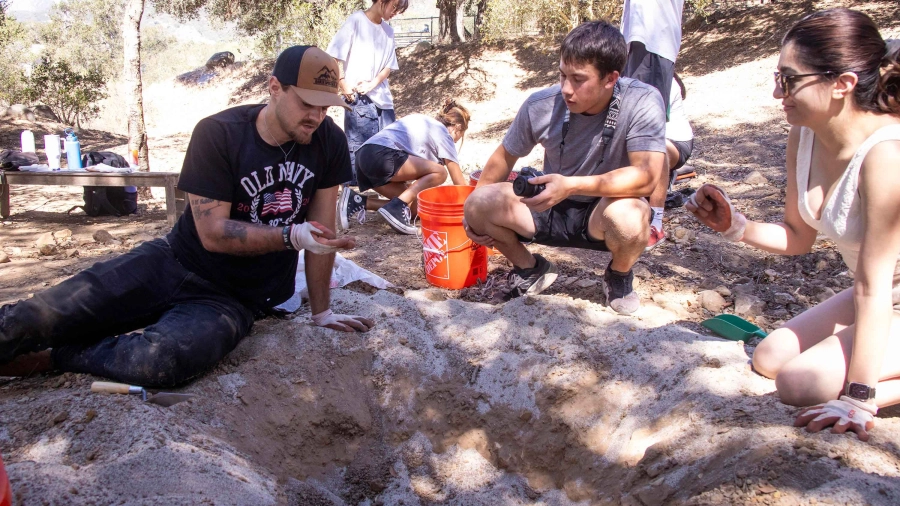
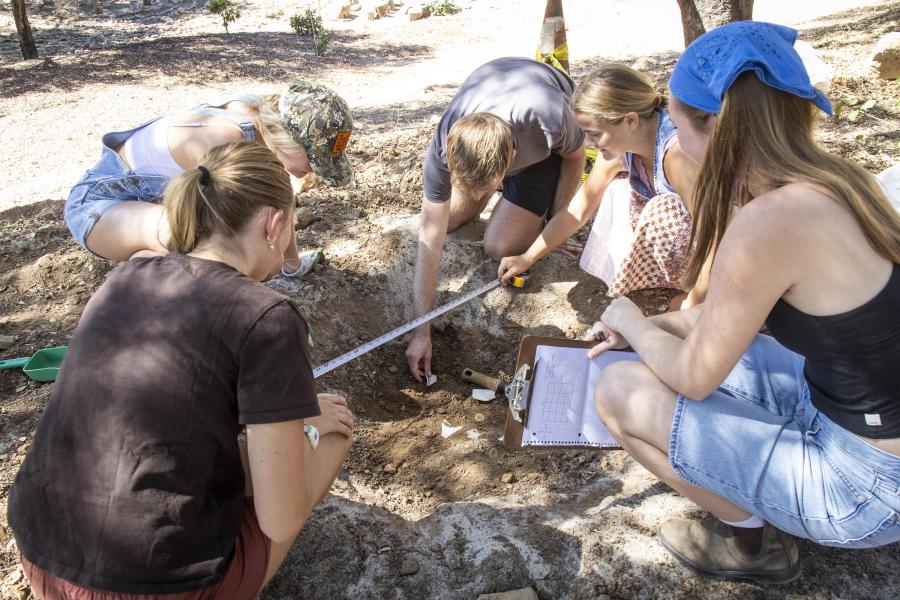
The scene resembles an excavation in the Middle East, but these students are working near Westmont’s community garden on lower campus. They are enrolled in Introduction to Archaeology, a new course taught by Sara Morrisset, assistant professor of history.
Morrisset introduced the hands-on excavation practicum this semester to show students how archaeologists uncover the past. Before class began, she pre-dug four pits and created custom stratigraphy using layers of sand, dirt and hidden facsimile artifacts.
“The focus of this class teaches students how the study of material remains is crucial to history, especially for cultures with undeciphered writing systems or no writing system at all,” she says. “In many parts of the world, the only window into the past comes through archaeological remains.”
The interdisciplinary course draws 20 students from history, environmental studies, art history and anthropology. Teams of students take turns filling essential field roles, including excavator, photographer and detailed notetaker. They carefully measure, record and document findings on standard site plans before bagging each object for later analysis.
“Dr. Morrisset’s explained the difference between looting and archeology — what makes
you a grave digger versus
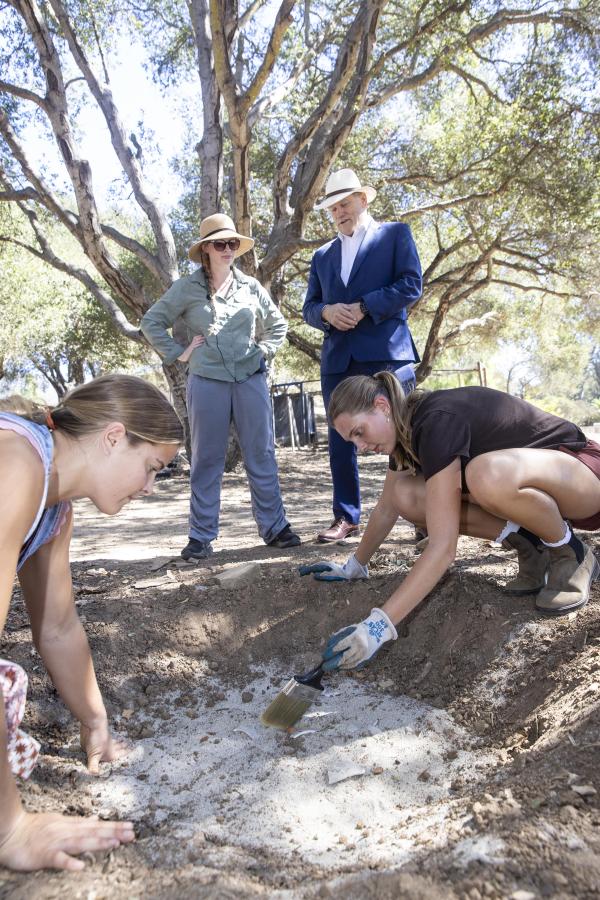
While working in the trenches, students discover that archaeological work requires extreme patience and precision.
“We’re learning that it’s very strenuous and particular,” Maddie said while carefully clearing away soil. “Even though we found items, we can’t just take those out. We left them there because we didn’t have time to figure out their measurements and which quadrant we found them in. I have so much more respect for the work.”
As students locate hidden replica clay oil lamps, ceramic pottery, metal coins, amber and shells, they also grapple with the theoretical aspects of the discipline.
Setting up a field dig requires careful planning, even on a college campus. Before digging, Morrisset called 811 two weeks in advance to ensure the excavation site cleared all underground utility lines.
President Gayle D. Beebe visited the excavation site to observe the students at work and share his appreciation for archaeological study. Beebe, who has participated in six archaeological trips to Israel, highlights the deep connection between archaeology and historical understanding.
“I love what it teaches you about civilization, how it progresses and how it declines,” Beebe says. “Particularly Old Testament Hebrew Bible scholars have always taken archaeology very seriously, believing that it actually tells more about God’s acts in history than just about anything other than Scripture. If you have a faith orientation, you come to recognize how important archaeology is in having confidence in the legitimacy of the faith.”
For Morrisset, the hands-on project reflects a lifelong passion for unearthing human history. Originally planning to attend art school for painting and drawing, her interest shifted to archaeology through the study of ancient art, architecture and artifacts. She has conducted field research across the globe, including the deserts and highlands of Peru, the jungles of Belize and the island of Menorca off the coast of Spain.
“I believe it’s such a privilege to try to uncover the lives of everyday people like us who lived long ago,” Morrisset says. “There is nothing more exciting than uncovering an ancient artifact that hasn’t been touched in over a thousand years. I love the scope of archaeology — how we study everything from ancient paintings and texts to microscopic plant remains in the soil.”
The history department plans to offer the popular course every fall, with hopes of expanding future offerings to include off-campus excavation trips.